Most weight-loss plans don't fail because the math is wrong. They fail because people quit. The treadmill gets boring, the meal plan gets joyless, and three weeks later the gym membership is just an expensive monthly donation. The single biggest predictor of whether you'll lose weight and keep it off isn't which workout you choose. It's whether you'll still be doing it in six months.
That's exactly why Brazilian Jiu-Jitsu is such an effective weight-loss tool. It's not just that it burns calories (it does, a lot). It's that it burns calories while being absorbing enough that you forget you're exercising. You don't watch the clock during a roll. You show up because you want to get better, and the weight loss happens almost as a side effect.
Here's the full case for why BJJ works so well.
It burns a serious number of calories
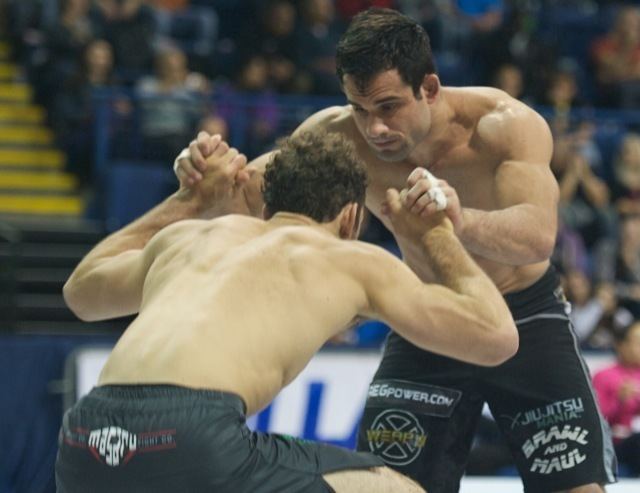
Grappling is deceptively demanding. A single hard round combines isometric grip fights, explosive scrambles, bridging, hip escapes, and the constant effort of moving another resisting human around. It's full-body work with very little rest.
Research on combat sports puts the energy cost squarely in the "vigorous exercise" category. Studies and standard metabolic estimates place grappling and wrestling-style training at roughly 9–10 METs, comparable to running or competitive swimming. In practical terms, an 80 kg (175 lb) person doing a genuinely active hour of BJJ can burn somewhere in the range of 600–900 calories, depending on intensity and how much live rolling is involved.
The important part is that this isn't steady-state cardio at one fixed pace. BJJ is interval training by nature: bursts of near-maximal effort during scrambles layered over a longer aerobic grind of pressure and control. That intermittent, high-intensity profile is the same one that makes a tough roll leave you breathing hard long after it ends. (If those bursts are what gas you out first, that's a trainable problem; see how to stop gassing out in BJJ.)
You build muscle while you do it
Steady-state cardio burns calories during the session and then stops. BJJ does something more useful for long-term fat loss: it builds and preserves muscle.
All those grip fights, frames, bridges, and scrambles are resistance training in disguise: your body is constantly working against the load of another person. Muscle is metabolically expensive tissue, so the more of it you carry, the more calories you burn at rest, around the clock. That means BJJ doesn't just create a calorie deficit during class; it nudges your resting metabolism in the right direction over time.
This is also why BJJ tends to change how your body looks faster than the scale suggests. People often lose centimeters and visibly lean out while the number on the scale moves slowly, because they're shedding fat while adding muscle. If you only judge progress by bodyweight, you can miss real, visible change. (For training that complements this directly, see strength training for BJJ.)
The "fun factor" is the secret weapon
This is the point most fitness advice skips, and it's the most important one.
Adherence beats intensity. A workout you'll do three times a week for two years will transform your body far more than an "optimal" program you abandon in a month. And BJJ is genuinely, addictively fun in a way that almost no other form of exercise is.
The reasons it sticks:
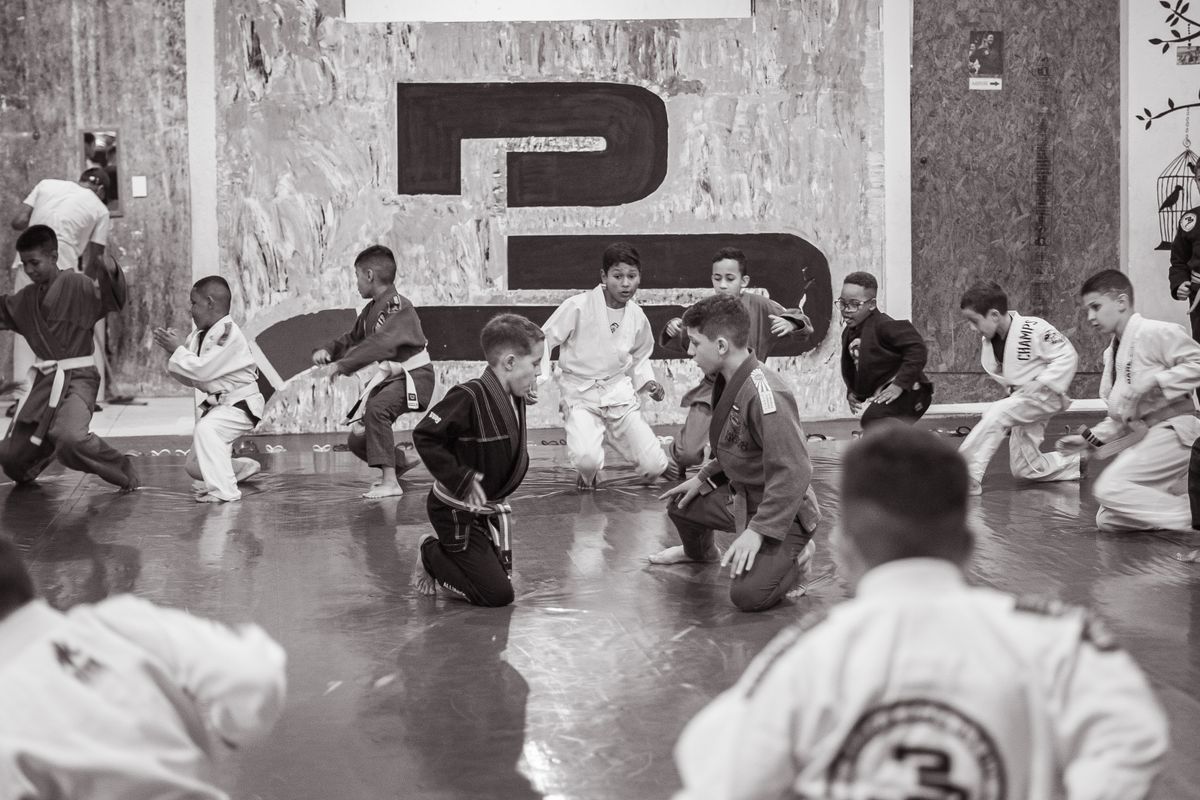
- It's a skill, not a chore. Every class you learn something. There's always a new escape, a sweep that finally clicks, a partner who taps you that you want to figure out. That curiosity pulls you back to the mats in a way "do 30 minutes of cardio" never will.
- It's social. You train with other people, you suffer together, and you make friends. Skipping class means letting your training partners down, which is a far stronger motivator than skipping a solo gym session.
- Progress is obvious. Stripes, belts, and the simple feeling of "I survived a round I'd have lost last month" give you milestones that keep you engaged long after the novelty of a typical New Year's gym plan wears off.
When exercise stops feeling like punishment, you stop needing willpower to do it. That's the whole game.
It rewires your relationship with food and stress
Weight loss isn't only about what happens on the mats. BJJ tends to quietly improve the other 23 hours of your day, too.
Hard training makes you more conscious of what you eat, because you can feel the difference between rolling well-fueled and rolling on garbage. Many people find that once they're training seriously, they naturally clean up their diet, not from guilt but because they want to perform. (We've got a full BJJ nutrition guide if you want to fuel it properly.)
There's a stress angle as well. When you're concentrating on not getting submitted, you physically cannot ruminate about work emails. BJJ is a remarkably effective off-switch for daily stress, and lower chronic stress means less stress-driven snacking and better sleep, both of which make fat loss easier.
A realistic plan for using BJJ to lose weight
To actually see results, a few practical guidelines:
- Train consistently, 3–4 times a week. This is the volume where most people see steady fat loss without burning out or getting injured. More isn't automatically better, especially early on. See how often you should train BJJ per week.
- Don't out-eat your training. BJJ creates a real calorie burn, but it's easy to erase with a single post-class meal. Weight loss still comes down to an overall calorie deficit; training just makes that deficit easier to sustain and protects your muscle while you're in it.
- Stay consistent, not perfect. A few missed weeks won't undo your progress; quitting entirely will. Build a habit you can keep. Even on days you can't make class, ten minutes of solo drilling at home keeps the routine alive.
- Track the right things. Body measurements, how rounds feel, and how your gi fits tell a truer story than the scale alone. Logging your sessions in DrillBuddy helps you see your training consistency build over weeks, and consistency is the variable that actually moves your weight.
The bottom line
BJJ checks every box for effective weight loss: it burns calories like serious cardio, builds calorie-hungry muscle like resistance training, and lowers stress like a hobby is supposed to. But its real edge over the treadmill is simpler than any of that: it's fun enough that you'll keep showing up.
The best weight-loss program is the one you don't quit. For a lot of people, that turns out to be the one where you're too busy trying to escape side control to notice you're getting in the best shape of your life.
If you're brand new, here's what to expect in your first month of BJJ. Find a gym, take the trial class, and let the rest take care of itself.
This article is for general information and isn't medical advice. If you have a medical condition or are starting a new exercise program after a long break, check with a physician first.
Sources: Compendium of Physical Activities: MET values for martial arts and wrestling, Physiological profiles of Brazilian jiu-jitsu athletes (PMC), Exercise adherence and long-term weight management (PMC).