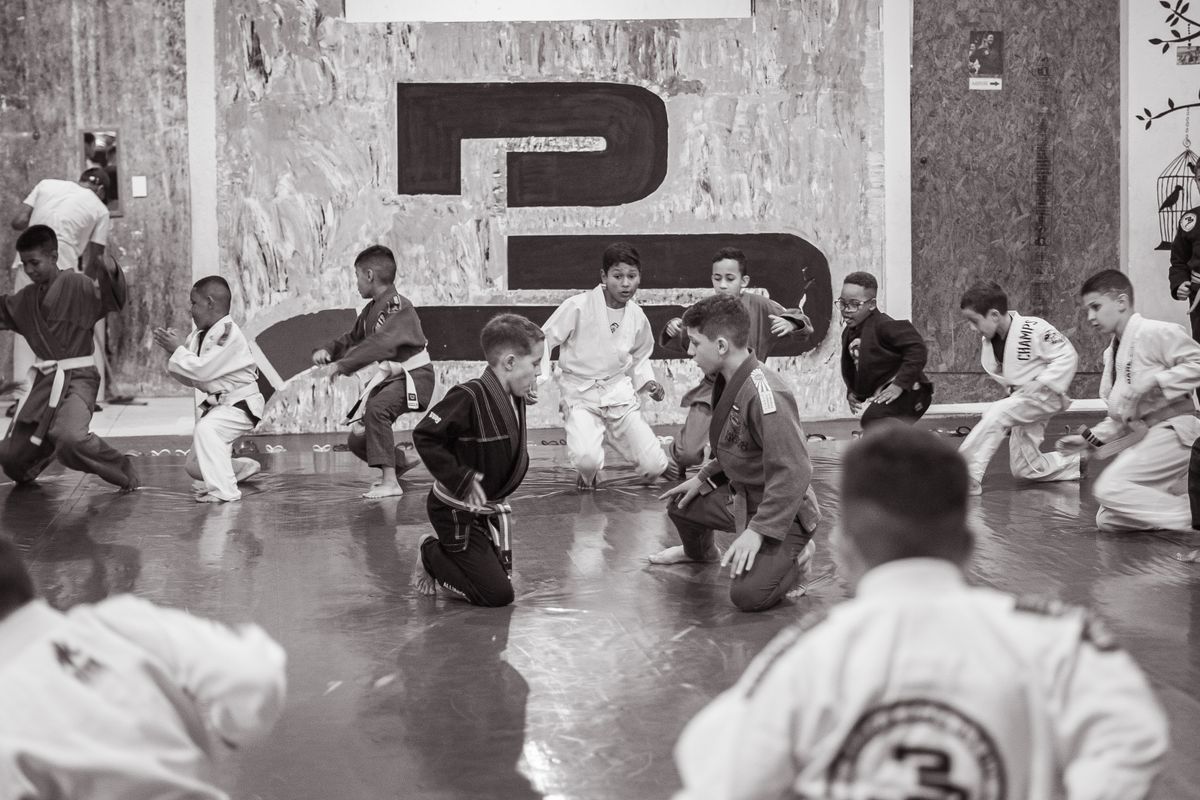
Ask any long-time grappler about their worst training memory and there's a good chance it involves a rash, not an injury. Brazilian Jiu-Jitsu puts you in sustained skin-to-skin contact with dozens of training partners a week, on mats that get sweated on for hours a day. That combination makes BJJ gyms one of the more efficient environments for spreading skin infections. Studies on wrestlers, a sport with similar contact patterns, have found infection rates as high as 20-77% of athletes over a season. The good news: almost all of it is preventable with a handful of boring, consistent habits.
This isn't medical advice, and anything that looks infected should be seen by a doctor. But knowing what you're looking at, and how it spreads, makes you far more likely to catch it early and keep it off the mats.
Why grappling is uniquely high-risk
Three things stack up against you in BJJ specifically:
- Sustained, full-body skin contact. Unlike a handshake-length interaction, a round of rolling can mean minutes of continuous contact with someone else's skin, sweat, and gi.
- A warm, damp environment. Mats absorb sweat all day, and fungi and bacteria both thrive in warm, moist conditions.
- Shared surfaces. Mats, gis (if borrowed), and gear get touched by everyone in a class, so one contagious person can expose an entire session.
None of this means BJJ is dangerous. It means hygiene is part of the sport, the same way stretching is part of injury prevention.
The infections you're most likely to run into
Ringworm (tinea corporis, sometimes called "tinea gladiatorum")
Despite the name, ringworm is a fungus, not a worm. It shows up as a red, circular, slightly raised patch with a clearer center, usually itchy, and it spreads through skin-to-skin contact or contact with a contaminated mat or gi. It's extremely common in grappling and generally treated with an over-the-counter or prescription antifungal cream. Left untreated, it spreads and gets passed to training partners, so treat it as soon as you spot it and cover the area with a bandage until it clears.
Staph infections (including MRSA)
Staphylococcus aureus bacteria live on a lot of people's skin without causing problems, until they get into a cut, scrape, or mat burn. A staph infection often starts as a red, tender bump that looks like a pimple or spider bite and can progress to a painful, pus-filled abscess. Methicillin-resistant staph (MRSA) is a strain that doesn't respond to common antibiotics and needs a doctor's attention. Any bump that's rapidly growing, unusually painful, or has a center that looks like it's filling with pus is worth getting checked rather than waiting out.
Impetigo
A highly contagious bacterial infection (usually staph or strep) that shows up as red sores that rupture quickly and form a honey-colored, crusty scab, most often around the nose, mouth, or on the arms and face where mat contact is highest. Impetigo spreads fast through an academy because the crust sheds bacteria onto everything it touches. It's treated with topical or oral antibiotics and clears up quickly once treatment starts, but training with active sores is one of the fastest ways to spread it to everyone you roll with that week.
Herpes gladiatorum ("mat herpes")
A herpes simplex virus (HSV-1) infection that spreads through skin contact during grappling, showing up as a cluster of small, painful blisters, often on the face, neck, or arms, sometimes with fever or swollen glands the first time it appears. Unlike the bacterial and fungal infections above, HSV never fully leaves the body; it can recur later, though usually less severely. Antiviral medication shortens outbreaks and reduces how contagious you are, but you should not train while any blisters are open or unhealed.
Folliculitis
Inflamed, sometimes pus-filled bumps around hair follicles, commonly from bacteria (including staph) trapped by friction from a gi or damp gear. It's usually milder than a full staph abscess and often clears with basic hygiene, but it's a signal that something on your gear or routine (a gi that isn't washed enough, a rash guard worn too many sessions in a row) needs attention.
Mat and gym hygiene: what a well-run academy does
If you're evaluating a gym, or running one, these are the practices that actually reduce infection rates, not just gestures toward cleanliness:
- Disinfect mats before and after every class, not just at the end of the day. EPA-registered disinfectants typically need 3-10 minutes of contact time (dwell time) on the surface to actually kill pathogens, so wiping and immediately walking on the mat defeats the purpose.
- Let mats dry before anyone trains on them. Wet mats redistribute whatever was just wiped off.
- Use dedicated mop heads and cleaning cloths for the mats only, washed separately in hot water, not shared with the rest of the facility.
- Enforce a no-street-shoes-on-the-mat rule, and provide a clear boundary (a mat edge, a shoe rack, sandals for walking to the bathroom) so nobody tracks outside dirt onto training surfaces.
- Keep hand sanitizer at the mat's edge for wiping down between drilling partners, especially during open mat.
Personal hygiene: the checklist that actually matters
Most infections don't come from the gym failing at cleaning; they come from individual habits. The highest-leverage ones:
- Shower immediately after every class, with soap, not just a rinse. Waiting until you're home gives bacteria and fungi hours to settle into your skin.
- Wash your gi and rash guard after every single session. Sweat-soaked fabric that sits in a gym bag for two days is close to ideal breeding conditions for exactly the organisms above.
- Keep fingernails and toenails short and trimmed. Long nails scratch skin (an easy entry point for staph) and also harbor bacteria themselves.
- Never train on an open cut, scrape, or unhealed wound without covering it completely, and ideally not at all if it's still open.
- Don't share towels, razors, soap bars, or water bottles. Use liquid soap over bar soap in shared bathrooms.
- Check your skin after class, not just before. Most of these infections are far easier to treat the day they appear than a week later.
When to skip class (and when it's fine to come back)
This is the part people are worst at, because nobody wants to miss training. A rough but reasonable standard, borrowed from wrestling's return-to-mat guidelines: don't train with any open, weeping, or actively contagious lesion, and after starting treatment, most athletic governing bodies require at least 48-72 hours on antibiotics or antivirals (with the lesion fully covered) before returning, and full healing before leaving it uncovered. If you're unsure whether something is contagious, a same-day walk-in clinic visit is cheaper than being the reason ten training partners get ringworm.
For the injuries side of things (joints, sprains, and the physical wear of training), see The Most Common BJJ Injuries for a fuller rundown of what else to watch for. And if you're brand new to the mats, BJJ for Beginners: What to Expect in Your First Month covers the etiquette side of showing up clean and prepared.
None of this is a reason to avoid BJJ. It's a contact sport, and contact sports come with contact-sport hygiene. Treat mat hygiene the same way you treat warming up: not optional, not glamorous, but the thing that keeps you training consistently instead of sitting out with a rash you could have prevented. Log your sessions in DrillBuddy so the only thing interrupting your training streak is a well-earned rest day, not a trip to urgent care.
Sources: NJ Department of Health — Guidelines for Skin Infections in Contact Sports, National Athletic Trainers' Association Position Statement: Skin Diseases, NY Department of Health — Preventing Skin Infections, Skin infections and wrestling — Wikipedia.
Cover image: illustration of hepatitis C virus particles, via the University of Copenhagen, Faculty of Science.