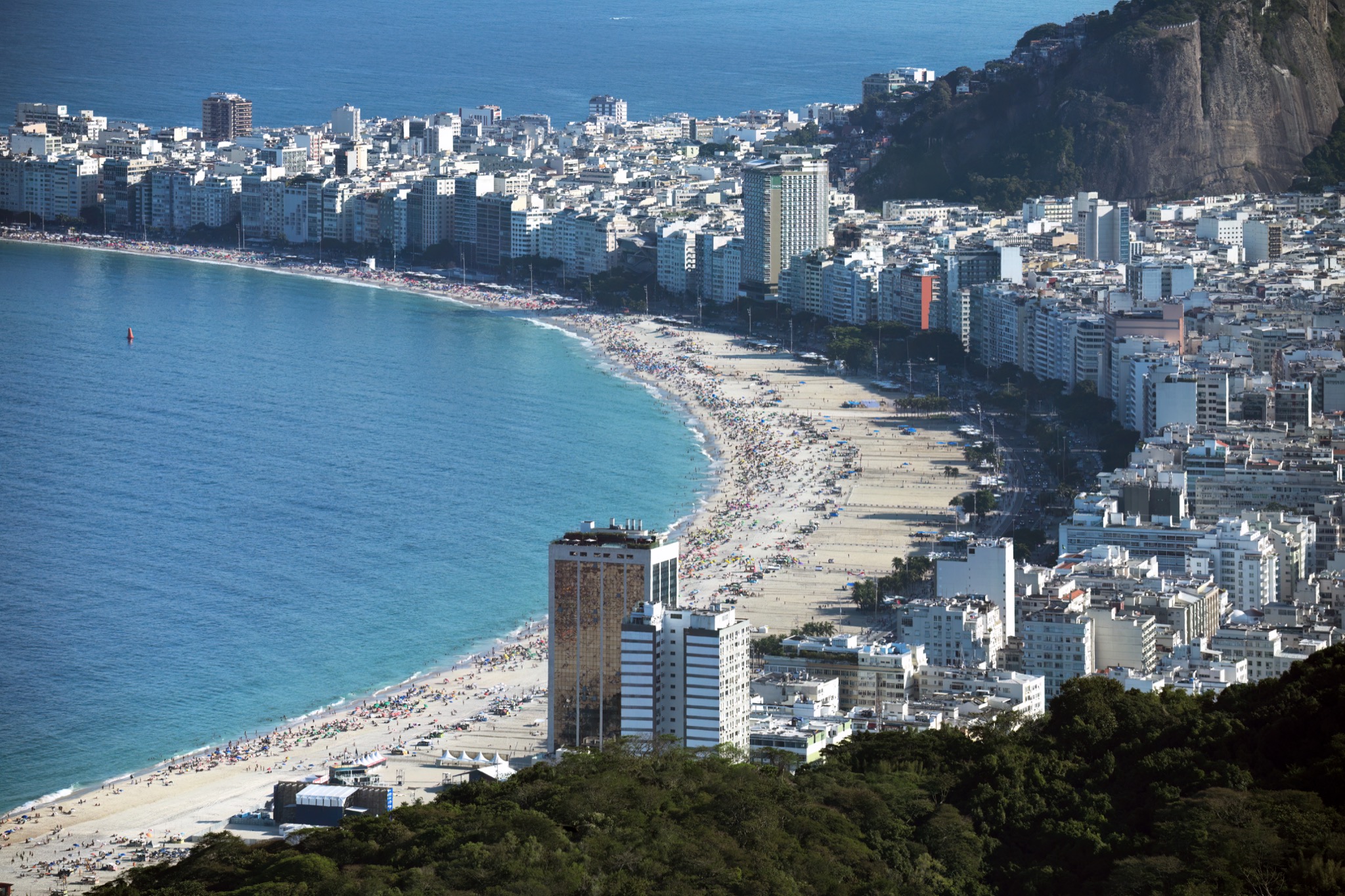
New York has the history. San Diego has the roster. Rio has the origin.
Be honest about what that does and doesn't mean. The competitive centre of gravity in jiu-jitsu left this city years ago, and it went to São Paulo, to southern California, to Texas. If you want to train next to the current ADCC podium, book a flight to San Diego and read our guide to that city instead.
What Rio has is something no other city can acquire. The art was invented here. Trace the lineage on your own certificate back far enough and it runs through a handful of rooms inside about ten square kilometres of this city, and most of those rooms are still open, still teaching, quite often with the founder's son on the mat. You can take a morning class in the academy Hélio Gracie built, walk twenty minutes down Copacabana, and take an evening class on the third floor where Carlson Gracie's team spent the 1980s beating everyone. That is not a museum trip. Both are working academies with a Tuesday timetable.
This guide covers nine academies worth your mat time, who teaches at each, and the practical stuff nobody tells you, starting with the single biggest difference between dropping in here and dropping in anywhere in the United States.
One note on prices before we start: everything below was checked in July 2026 and is listed exactly as each academy publishes it. Which, in Rio, is almost nothing. Not one of the nine academies in this guide publishes a drop-in rate. We have not invented a single number to fill the gap. Where a gym doesn't publish a figure, the entry says so and gives you the phone number instead.
First: nobody publishes a price, and everything runs on WhatsApp
This is the thing to internalise before you plan anything. In New York you check a website and see $45. In Rio you will check nine websites and see zero prices, several dead domains, and at least one schedule that was last updated during a different government.
That is not evasiveness. Brazilian academies mostly don't sell to strangers over the internet, they sell to people who walk in or message. And the message is WhatsApp, not email. A gym that ignores an email for a week will answer a WhatsApp in twenty minutes.
Send something like this, in Portuguese, a few days before you travel:
Olá! Sou faixa-azul, estou de viagem no Rio e gostaria de treinar com vocês no dia 14. É possível? Qual o valor da aula avulsa?
("Hello! I'm a blue belt, travelling in Rio, and I'd like to train with you on the 14th. Is that possible? What's the drop-in rate?") Swap the belt: branca, azul, roxa, marrom, preta. The phrase you want for a single visit is aula avulsa; the phrase for the free trial class that most Brazilian academies offer as standard is aula experimental. Ask for the first, and if they offer the second, take it and be gracious about it.
The rest of the routine:
- Bring cash in reais. Everyone in Brazil pays by Pix, the instant bank transfer, and you almost certainly can't use it: Pix is tied to a Brazilian tax ID. A small academy's front desk may not have a card machine that likes a foreign card either.
- Cluster by neighbourhood, and respect how big this city is. Six of the nine are in Zona Sul, the strip where you'll be staying: Copacabana, Ipanema, Leblon, Flamengo, Lagoa. One is out in Barra da Tijuca, forty minutes west. One is in Méier, in Zona Norte, and that is a different trip entirely.
- The metro is genuinely useful here. Linha 1 and Linha 4 run under Copacabana and Ipanema, north through Botafogo and Flamengo to Centro and Tijuca, and west to the Jardim Oceânico terminal in Barra. Beyond that, Uber, which is cheap by North American or European standards and is what everyone uses after an evening class.
- Classes are in Portuguese. All of them, with one partial exception on this list. You will be fine, because the vocabulary of jiu-jitsu already is Portuguese, and a demonstrated armbar needs no translation. Learn pode bater (you can tap), troca (switch partners) and vai (go).
- Check the gi rules once. Only one academy here is strict about it, and it's Gracie Barra, which requires an official Gracie Barra kimono. A plain gi with no other team's patches is the universal passport everywhere else.
- Tap early. Rio blue belts have been rolling in rooms full of Brazilians since their first month. This is not a city where visitors need to prove anything.
1. Academia Gracie (Gracie Humaitá): where all of it started

Photo: © Academia Gracie Humaitá, via academiagracie.com.br
Where: Rua Vítor Maúrtua 14 A, Lagoa, Rio de Janeiro 22471-200 · read the next paragraph before you put an address in your phone
Getting there: in the Fonte da Saudade corner of Lagoa · no metro stop nearby, so Uber from Copacabana or Ipanema (10 to 15 minutes)
Drop-in: not published · WhatsApp via the site, or call +55 21 3437-5284 · contato@academiagracie.com.br
Memberships: not published · the site takes bookings for an aula experimental (trial class)
Head instructor: Mestre Rolker Gracie, son of Hélio Gracie
Lineage: Carlos Gracie Sr. → Hélio Gracie → Rolker and Royler Gracie
Adult schedule: Mon, Wed, Fri 7:00–8:30am · Tue, Thu 11am–12pm (Tuesday's 11am is no-gi) · Mon–Fri 7:00–8:30pm · Sat 10am–12pm
The address is the first thing to get right. The school is still called Humaitá, after the street the academy occupied for decades, but it is no longer in Humaitá. Rolker Gracie announced the move in 2023, and the matriz now sits in Lagoa, at Rua Vítor Maúrtua 14A. Older listings, older guidebooks and a good deal of the internet will still send you to the old address or to the interim location at Colégio Padre Antônio Vieira. Put the Lagoa address in your phone, and confirm on WhatsApp.
Once you're there, the point is obvious. This is the direct continuation of Hélio Gracie's own academy, run today by his son. Royler Gracie, four-time IBJJF World Champion in the featherweight black belt division, three-time ADCC champion at −65kg, and a member of both the IBJJF and ADCC Halls of Fame, is the name most visitors associate with the school, and it is worth being clear-eyed: Royler has lived and taught in California for years. The person leading the Rio matriz is Rolker. The jiu-jitsu is the family's own: defensive structure first, positional discipline, self-defence never quite out of view. If you have read about the difference between "Gracie jiu-jitsu" and the sport version and never actually felt it, a Wednesday morning here explains it in ninety minutes.
What visitors like: the lineage without the theatre, a schedule built around 7am and 7pm so it fits a holiday, and a Saturday morning session that runs a full two hours. What to know: nothing is published, the address has moved, and the timetable has a real hole in it. There are no adult classes between 12:30pm and 7pm on most days, and no Sunday.
2. Gracie Barra Rio Matriz: the mat the world's biggest franchise started on
Logo: © Gracie Barra Rio Matriz, via facebook.com/gbriomatriz
Where: Av. Comandante Júlio de Moura 300, Barra da Tijuca · above the ByFit health club, one block from Barra beach Getting there: Jardim Oceânico, the western terminus of metro Linha 4, is in this pocket of Barra, which makes this the one Barra academy you can plausibly reach from Ipanema without a car. Confirm the walk when you message them. Drop-in: not published · contact through graciebarra.com.br or the academy's Facebook page Founded: 1986, by Carlos Gracie Jr. Lineage: Carlos Gracie Sr. → Hélio Gracie → Carlos Gracie Jr. → Gracie Barra Gi: an official Gracie Barra kimono is required. If you don't own one, you buy one.
Gracie Barra now has schools on six continents and its global headquarters in California, and the whole thing started on this mat, in this building, in 1986. If you train at a GB school anywhere in the world, this is the room your curriculum comes from, and there is a genuine pleasure in taking a GB1 fundamentals class in the place where GB1 was invented.
The trade is that Gracie Barra is Gracie Barra everywhere, including here. The etiquette code is strict, the class structure is the standardised global one, and the kimono rule is enforced rather than suggested. That predictability is exactly why some travellers love dropping into GB schools and exactly why others don't bother. Note also that Carlos Gracie Jr. is not based in Rio, so ask who is actually teaching the class you're booking before you commit to the trip out west.
What visitors like: the history, the beach a block away, and a syllabus you can step straight into if you're a GB member at home. What to know: the gi requirement is a real cost if you turn up without one, nothing is published, and Barra is a different city from Zona Sul in practice. Make it its own day.
3. Alliance Rio de Janeiro: the best classroom in Zona Sul
Logo: © Alliance Rio de Janeiro, via facebook.com/allianceriodejaneiro
Where: Rua Alberto Rangel 71, Alto Leblon, inside the Clube Campestre Getting there: Alto Leblon is up the hill behind Leblon. It is not a flat walk from the beach, so take an Uber and allow for the club's entrance procedure. Drop-in: not published · call or WhatsApp +55 21 3256-7564 / +55 21 99564-9916 Head instructor: Alexandre "Gigi" Paiva, 6th degree black belt Lineage: Romero "Jacaré" Cavalcanti → Alexandre Paiva · Paiva took his black belt from Jacaré in 1993 and co-founded Alliance alongside Jacaré and Fabio Gurgel The room: roughly 520 m², fully air-conditioned, around eight instructors rotating through the timetable
Alliance is the most successful competitive team in the history of the IBJJF, and Gigi Paiva is one of the three men who built it. He is a World Champion at black belt and a four-time Masters World Champion, and the list of champions he has personally developed is the real credential: Fernando "Tererê" Augusto, Leo Leite, Tayane Porfirio and his own son Victor Genovesi all came through this room.
For a visitor staying in Zona Sul, this is arguably the best pure classroom on the list. It's a proper competition-standard academy that happens to sit fifteen minutes from Ipanema rather than an hour away in Barra, and the air conditioning is not a small detail in a Rio summer. The instruction is old-Alliance in character: heavy on structure, pressure and grip detail, light on fashion.
What visitors like: the coaching depth, the location, and a mat that is climate-controlled when the city outside is not. What to know: it sits inside a private club, so getting through the door needs a phone call first rather than a walk-in; and their website, allianceriodejaneiro.com.br, was not responding when we checked in July 2026, so treat the phone and WhatsApp numbers as the only live channel.
4. Checkmat HQ (Fightzone): the one you can walk to from Copacabana
Logo: © Fightzone Checkmat RJ, via facebook.com/fightzonerj
Where: Rua Francisco Sá 36, Copacabana (the Posto 6 end, towards Arpoador)
Getting there: genuinely walkable from most of southern Copacabana and from Ipanema · metro Cantagalo or Ipanema/General Osório, then ten minutes on foot
Drop-in: not published · (21) 2146-7980 or (21) 2287-1423 · fightzonerj@gmail.com
Head instructor: Ricardo "Ricardinho" Vieira, 6th degree black belt, co-founder of Checkmat
Lineage: Romero "Jacaré" Cavalcanti → Ricardo Vieira · he started in Jacaré's kids' class at five years old
Team: the Rio headquarters of Checkmat, founded in 2008 by the Vieira brothers, whose worldwide HQ is in Signal Hill, California
Ricardo Vieira won the World Championship at every belt he competed in, blue through black, taking the black belt title in 2001. He has been running this room ever since, and it is the most visited academy on this list for one very simple reason: it is two streets from Copacabana beach, and it is a serious academy. Those two things rarely coincide anywhere.
Checkmat's flavour is modern and movement-forward, comfortable in gi and no-gi, and Fightzone runs both. If you're in Rio for four days and want one academy you can reach on foot, in flip-flops, twice a day, this is the answer.
What visitors like: the location, the breadth of the timetable, and a room used to foreigners walking in. What to know: the academy's old domain, fightzonerj.com, has lapsed and now redirects to a domain broker, so ignore any link to it. Contact goes through the phone numbers, the Gmail address, or their Instagram. No rates are published.
5. GFTeam Matriz: the competition room, and the hardest trip
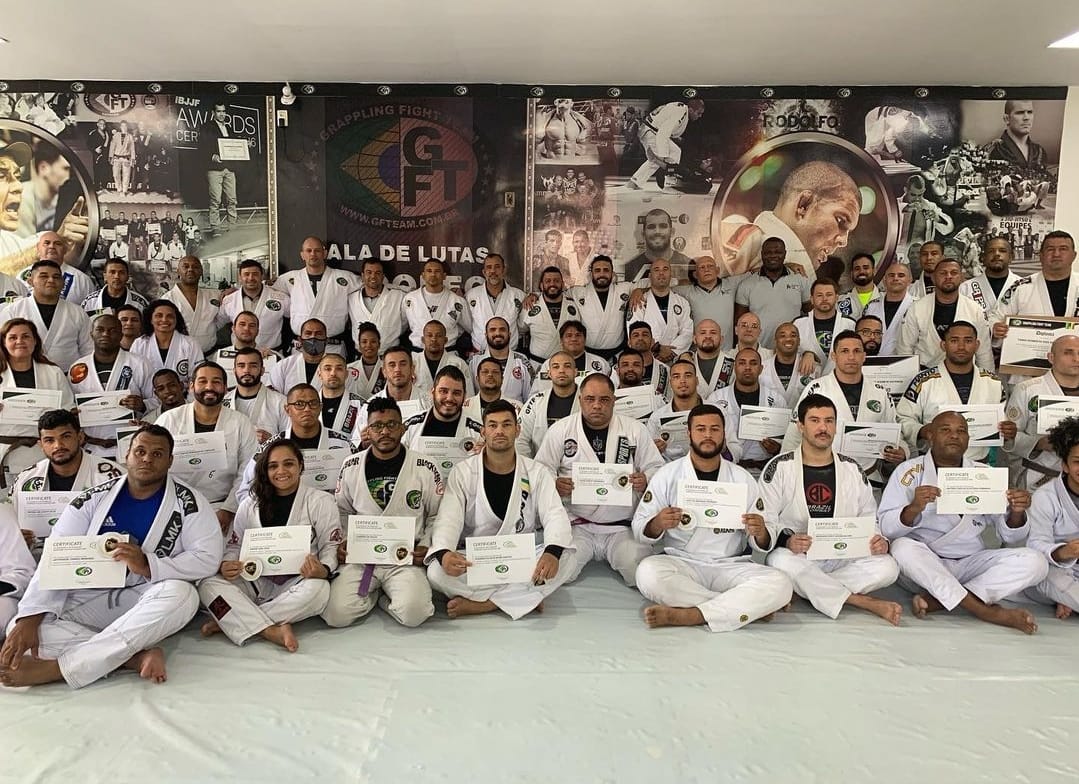
Photo: © GFTeam, via gfteamofficial.com.br
Where: Rua Arquias Cordeiro 478, Méier, Rio de Janeiro · Zona Norte Getting there: Uber from Zona Sul, 40 to 60 minutes depending on traffic. Méier has a SuperVia commuter rail station out of Central do Brasil, but that is not the arrival most visitors carrying a gi bag should plan on. Drop-in: not published · call (21) 3497-0478 Head instructor: Mestre Julio Cesar Pereira, 8th degree red-and-white coral belt, with Professor Huanderson Pavão Lineage: Oswaldo Fadda → Monir Salomão → Julio Cesar Pereira · one of the very few elite teams in the sport with no Gracie in its line Julio Cesar's record: two-time IBJJF World Champion, two-time Pan American champion, eight-time Brazilian champion, 21-time Rio de Janeiro state champion Produced: Rodolfo Vieira, among a long list of world champions
Every other academy in this guide descends from the Gracie academy in one way or another. GFTeam does not. Julio Cesar Pereira came up through Oswaldo Fadda, the Bonsucesso master who opened his school on the outskirts of Rio in 1950 and taught in the suburbs and the favelas at a time when jiu-jitsu was an upper-class Zona Sul pursuit. Fadda challenged the Gracie academy publicly through the newspapers in 1951 and again in 1955, and who actually won the 1955 meeting is still argued over: contemporary press reported a Gracie win on aggregate, while other accounts, including Reila Gracie's biography of Carlos, have Fadda's team taking it on the strength of the footlocks Hélio dismissed as "suburban technique". That line runs Fadda to Monir Salomão to Julio Cesar, and it is still headquartered in Zona Norte on purpose. If the sport's social history interests you at all, this room is the one that will stay with you.
It is also the hardest training on this list. GFTeam is a competition team first, the sessions are long and physical, and the room is full of people who are not being polite to you because you flew in. Which, for some visitors, is exactly the point.
What visitors like: the intensity, the lineage, and the sense of training in the working half of the city rather than the postcard half. What to know: the trip is real, no rates are published, English will be scarce, and Mestre Julio Cesar has been based in California since 2018 while continuing to compete and corner internationally, so do not assume he'll be the one on the mat. Ask when you call.
6. Nova União at Academia Upper: the MMA room
Logo: © Academia Upper, via academiaupper.com.br
Where: Rua Marquês de Abrantes 96, Flamengo, Rio de Janeiro Getting there: metro Largo do Machado or Catete on Linha 1, both a short walk · one of the easiest academies here to reach on public transport Drop-in: not published · (21) 2553-3485 or (21) 3088-8612 Instructors (per Nova União's own listing): Mestre André "Dedé" Pederneiras and Mestre Ivanilson Silva Pederneiras: 7th degree red-and-black coral belt, six-time Brazilian national jiu-jitsu champion, co-founder of Nova União · the club's own material also credits him as the world's best MMA coach of 2010 Club hours: Mon–Fri 5am–10pm · Sat 8am–8pm · Sun and holidays 9am–2pm The facility: around 3,000 m², with weights, pilates, spinning, four heated saltwater pools and saunas
Nova União is the team that produced José Aldo and Renan Barão, and its headquarters is this room in Flamengo. For a decade it was one of the two or three most important MMA gyms on earth, and the jiu-jitsu underneath that reputation is Pederneiras and Wendell Alexander's, built explicitly to compete with the established Rio teams rather than to inherit from them.
The practical character of the place is different from everything else on this list, and you should know it going in: Upper is a large commercial health club with a fighting floor inside it, not a jiu-jitsu academy with a weight room attached. That has upsides. It opens at five in the morning, it's on the metro, and the same building has four pools and a sauna. It also means your drop-in is partly a club-access question rather than purely a mat question, so be very clear on the phone about what you're asking for.
What visitors like: the metro access, the 5am opening, the facilities, and the history. What to know: the club schedule is not the jiu-jitsu schedule, nothing is published, and the team's own website is more useful than the club's for working out who teaches what. Call before you go.
7. Escola Delariva: the guard you already use, taught by the man it's named after

Photo: © Escola Delariva de Jiu-Jitsu, via delariva.com.br
Where: Rua Pompeu Loureiro 116, inside the Club Olympico, Copacabana
Getting there: central Copacabana, a few blocks back from the beach · metro Cardeal Arcoverde or Siqueira Campos
Drop-in: not published · +55 21 3795-2600 · WhatsApp +55 21 99323-7660 · contato@delariva.com.br
Head instructor: Grande Mestre Ricardo de la Riva Goded, 8th degree coral belt
Lineage: Carlson Gracie → Ricardo De La Riva, black belt in 1986
Schedule: Mon–Fri 7–8am · Mon, Wed, Fri only 5:30–6:30pm · Mon–Fri 7–8pm
In 1985, at the Copa Cantão, a twenty-year-old brown belt beat the until-then unbeaten Royler Gracie using a hook off the outside of the leg that nobody had a name for. The press named it after him. Forty years later it is the single most-used open guard in the sport, and the man himself teaches three classes a day in Copacabana.
That is a strange and slightly wonderful fact, and it is the reason to come. De La Riva stepped away from competition in 1993 to teach full time, came back once in 2002 at thirty-seven and took a World Championship bronze, and has spent the decades since producing black belts including Rodrigo and Rogério Nogueira. The academy sits inside the Club Olympico, which is an ordinary Copacabana sports club, and there is nothing grand about the room. There doesn't need to be.
What visitors like: the obvious, plus a 7am class in walking distance of most Copacabana hotels. What to know: the schedule is genuinely small. Three one-hour slots a day, and the 5:30pm class does not run on Tuesdays or Thursdays. Nothing is published, and this one is a WhatsApp message rather than a booking form.
8. Academia Carlson Gracie: the third floor where the 1980s happened
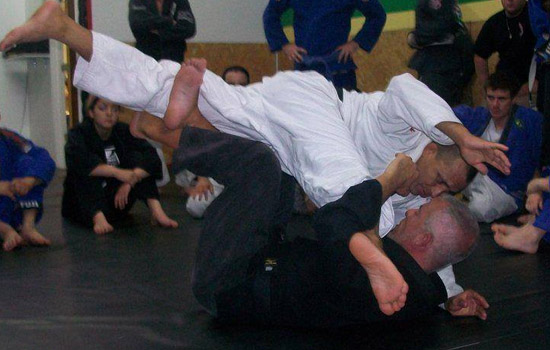
Photo: © Academia Carlson Gracie / Academia Saporito, via clubecarlsongracie.com.br
Where: Rua Figueiredo Magalhães 414, 3rd floor, Copacabana, Rio de Janeiro 22031-010
Getting there: central Copacabana, two blocks from Av. Nossa Senhora de Copacabana · metro Siqueira Campos
Drop-in: not published · phone and WhatsApp +55 21 98121-5977 · also (21) 2547-6608 · marcelosaporitobjj@hotmail.com
Head instructor: Mestre Marcelo Saporito, black belt 6th degree by the academy's own listing, promoted by Carlson Gracie himself in 1995
Lineage: Carlos Gracie Sr. → Carlson Gracie → Marcelo Saporito
Open: Mon–Fri, roughly 7am to 11pm, with morning, afternoon and evening classes · jiu-jitsu, MMA and self-defence · adults, teens and children from six
This is the room. Carlson Gracie opened his academy in Copacabana and through the 1980s his team simply beat everybody, producing a generation (Murilo Bustamante, Ricardo Liborio, Wallid Ismail, Amaury Bitetti, Vitor Belfort and a long list after them) that went on to define both jiu-jitsu and early MMA. If you have read our history of the sport's most influential athletes, a great many of the names in the 1980s and 1990s sections passed through this third floor.
Marcelo Saporito took over the impossible job of following Carlson and has held the academy together since, through a fire that closed the place for months before it reopened in 2022. It is a working neighbourhood academy now rather than a superteam camp, and the training is old-school Carlson: pressure, top game, no ceremony.
What visitors like: the history, an unusually long daily window that makes it easy to slot a class in, and the fact that it's a five-minute walk from two other academies on this list. What to know: it's up on the third floor of an ordinary Copacabana building and looks like nothing from the street, so check the number. Nothing is published, and this is a phone or WhatsApp job.
9. Brazilian Black Belt: the one set up for foreigners
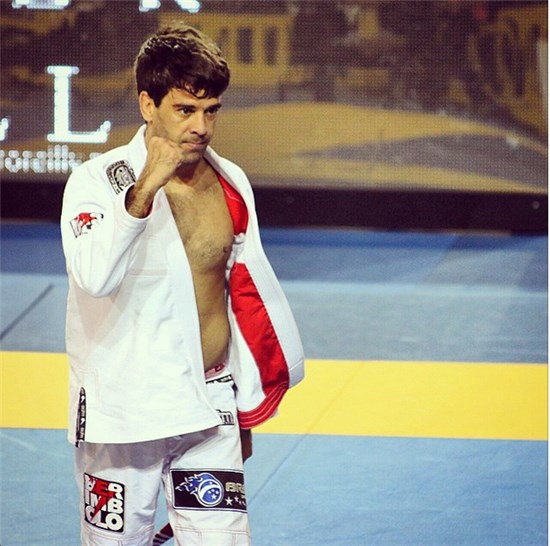
Photo: © Brazilian Black Belt, via brazilianblackbelt.com
Where: Rua Visconde de Pirajá 151, sala 201, Ipanema, Rio de Janeiro
Getting there: the best-located academy in the guide · one block from General Osório metro (Linha 1 and Linha 4), in the middle of Ipanema
Drop-in: not published · WhatsApp +55 21 99404-4567, which the academy names as the best way to reach it · felipepcs@hotmail.com
Founder: Felipe Costa, IBJJF World Champion at black belt in 2003 at roosterweight
Also on the timetable: boxing, muay thai, kickboxing and judo, and the academy states that one fee covers every class in the building
Rough shape of the day: jiu-jitsu from 7am, boxing through the middle of the day, afternoon and evening classes from 4pm to 10pm
Felipe Costa's 2003 world title is one of the better stories in the sport. He had never medalled at a major tournament at any coloured belt, got his black belt from Rodrigo Medeiros in 2002, and won the Worlds a year later, which broke a widely held assumption that early success at blue and purple is a prerequisite for anything. He then stayed in the world top three at roosterweight for the better part of fifteen years, and by his own account added world titles under the UAEJJF and CBJJO banners as well.
The academy he built in Ipanema is the most visitor-shaped room in Rio. It is a block from the metro, the walk-up is on the main street of Ipanema, and it has been running since 2003 with a steady flow of foreigners on the mat. If you are travelling with someone who does not train and needs a boxing class, or you want somewhere to start before you go and get folded in half at GFTeam, start here.
What visitors like: the location, the mixed timetable on one fee, and a room where being a visitor is completely normal. What to know: Felipe travels to teach and compete and also runs an academy in Buffalo Grove, Illinois, so do not book the trip on the assumption that he is personally teaching the class. Ask on WhatsApp. And as everywhere else here, no rates are published.
More worth knowing about
Three rooms that didn't make the numbered list, and one warning.
- Gordo Jiu-Jitsu, Barra da Tijuca. Roberto "Gordo" Correa is the man who turned half guard from a place you got stuck into a place you attack from, and his academy has a long-standing reputation as one of the friendliest in Rio for foreigners. If you're already going out to Barra for Gracie Barra, it's worth asking about both on the same day.
- Brazilian Top Team. Murilo Bustamante's team, out of the Carlson Gracie line, and one of the genuinely important names in Brazilian MMA. Listings disagree on the current address, which usually means a move, so verify before you travel.
- Gracie Barra Copacabana. If the Barra trip is too much but you want the Gracie Barra curriculum, Master Matheus Valentim runs a GB school at R. Barata Ribeiro 655 in Copacabana.
- A warning about Connection Rio. For years the standard advice to a visiting grappler was to book the jiu-jitsu hostel in Barra. As of July 2026 its website does not resolve and its founder is running an academy in Oregon. Don't plan a trip around it without confirming it exists.
Mat etiquette: how not to be the annoying visitor
None of this is Rio-specific, but you're a stranger on someone else's mats in a city where jiu-jitsu is a hundred years of local heritage rather than a hobby, and the entire impression you leave rests on about six things.
Hygiene comes first, and it's not negotiable. Clean gi every session, actually washed. Trimmed nails on hands and feet. No jewellery. Any skin condition, cover it or sit out. Our mat hygiene guide goes deeper, and it matters more in heat and humidity than it does at home.
Flip-flops on, off the mat. Bare feet, on the mat. Never walk to the bathroom barefoot and step back on. This is the single most common thing visitors get wrong.
Introduce yourself to the professor before class, not during. Three sentences of bad Portuguese are worth more than three sentences of good English. Bom dia, professor. Meu nome é [X], sou faixa-[azul] da academia [Y]. Obrigado por me receber.
Respect the tap, theirs and yours. Tap early as a guest. You have nothing to prove in a room you'll never see again, and release instantly when your partner taps.
Roll to your host's level, not your ego's. Rio rooms tend to roll hard and calmly at the same time. Match the calm, not just the hard.
Ask before you film. Every academy has a policy. Ask at the desk, not afterwards.
Say thank you on the way out. Obrigado pelo treino. To the professor and to everyone who rolled with you.
What to pack for a Rio training trip
The packing list is dominated by one fact: it is hot and it is humid, and nothing you own is going to dry.
- Two gis, if you can carry them. One will not be dry by the next session. If you can only bring one, bring one and plan a laundry stop, because lavanderias are everywhere in Zona Sul and cheap.
- A plain gi with no other team's patches for everywhere except Gracie Barra, which needs an official GB kimono.
- Rashguard and shorts or spats. No pockets, zips or buttons. Useful at every academy here and essential for the no-gi slots.
- A mesh or vented gear bag. A sealed bag plus a wet gi plus a Rio afternoon is a science experiment. See the mat hygiene guide for why this matters more than it sounds.
- Flip-flops. Non-negotiable, see above.
- Cash in reais. Pix won't work for you, and the front desk may not take your card.
- Electrolytes. Between December and March you will lose more in a 90-minute class here than you're used to. If you already struggle with this, our notes on not gassing out are worth a read before you fly.
- A padlock and your own towel. Assume neither is provided.
- Sunscreen, and the discipline to keep your phone in your bag rather than in your hand when you're walking between the academy and the beach.
Practical planning notes
Costs at a glance. This is the shortest table we have ever published, and that is the point. As of July 2026:
| Academy | Neighbourhood | Drop-in | Contact |
|---|---|---|---|
| Academia Gracie (Humaitá) | Lagoa | not published | +55 21 3437-5284 |
| Gracie Barra Rio Matriz | Barra da Tijuca | not published | via graciebarra.com.br |
| Alliance Rio de Janeiro | Alto Leblon | not published | +55 21 3256-7564 |
| Checkmat HQ / Fightzone | Copacabana | not published | (21) 2146-7980 |
| GFTeam Matriz | Méier | not published | (21) 3497-0478 |
| Nova União / Academia Upper | Flamengo | not published | (21) 2553-3485 |
| Escola Delariva | Copacabana | not published | WhatsApp +55 21 99323-7660 |
| Academia Carlson Gracie | Copacabana | not published | WhatsApp +55 21 98121-5977 |
| Brazilian Black Belt | Ipanema | not published | WhatsApp +55 21 99404-4567 |
Rio trains in the morning. Look at the schedules: 7am at Gracie Humaitá, 7am at Delariva, 7am at Brazilian Black Belt, 5am doors at Upper. If you're here on business, or with people who want to be on the beach by eleven, the early class is not a compromise here. It's the main event.
The middle of the day is empty, and so is Sunday. Between roughly 12:30 and 4pm most of these academies have no adult class at all, and not one of them publishes a Sunday adult session. Plan sightseeing into the hole rather than fighting it.
Copacabana is a training neighbourhood. Delariva, Carlson Gracie and Checkmat/Fightzone are all within about a twenty-minute walk of one another, and Brazilian Black Belt in Ipanema is one metro stop further. You could train at three different historic academies in one day without ever getting in a car.
Barra and Méier are day trips. Gracie Barra Matriz is forty minutes west and reachable on Linha 4. GFTeam in Méier is an hour north in traffic. Don't try to pair either with a Zona Sul session unless you've checked the timetable carefully.
Watch the calendar. Carnival, and the week either side of it, thins schedules out across the whole city. If you're travelling in February, ask specifically.
Don't lose what you pick up
Here's the thing about training in Rio: you will be shown something that has never made it out of this city.
A grip detail from a coral belt who has been teaching the same class since before you were born. A half guard entry in Barra from the person who invented modern half guard. Some piece of the De La Riva guard that you thought you already knew, corrected in twenty seconds by De La Riva. It will feel obvious while you're standing on the mat, and it will be gone by the time your flight lands. That's not pessimism, it's just how memory works, and we've written about why you forget techniques after class and what actually fixes it: capture it while it's fresh, then drill it deliberately when you get home.
That's exactly what we built DrillBuddy for. Log the session before you leave the building, break the new technique into steps while you can still feel it, and turn it into something you can run at your home gym next Tuesday. It works offline, which matters when you're on a foreign SIM in a basement in Copacabana. It's completely free, with no premium tier. And a year of training trips later, you'll have a library of things nobody at your gym has seen.
Pack two gis. Learn six words of Portuguese. Go to where it started.
Addresses, schedules, instructors and policies were verified in July 2026 and are published here as each academy states them. Prices are marked "not published" wherever the academy does not publish one, because a plausible-looking guess is worse than no number at all. Everything changes, so always confirm on WhatsApp before you travel. If you spot something out of date, let us know.