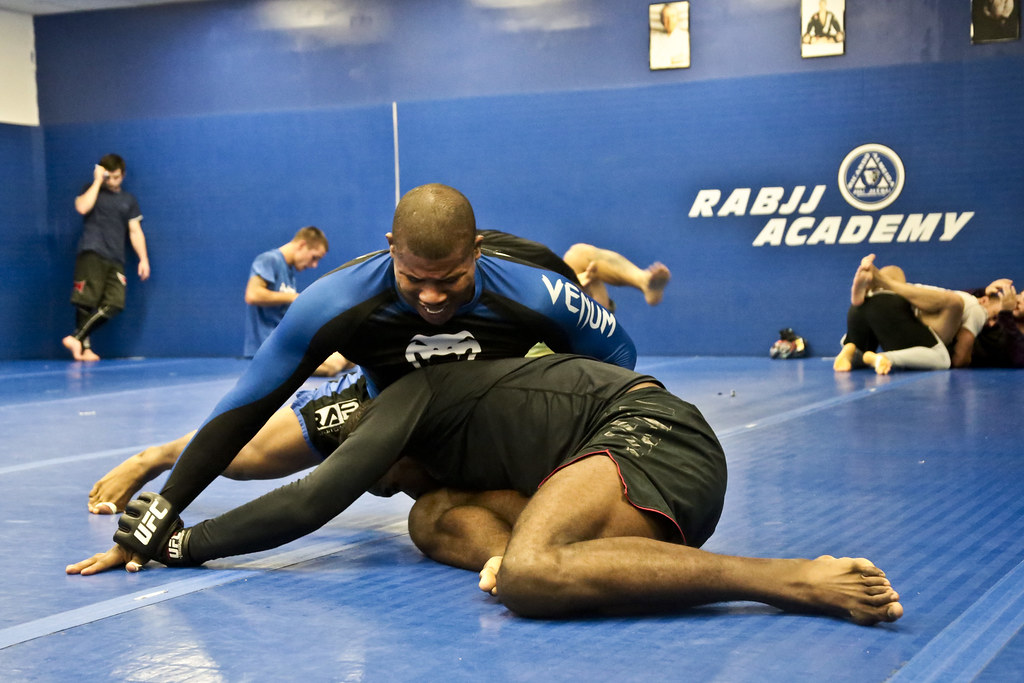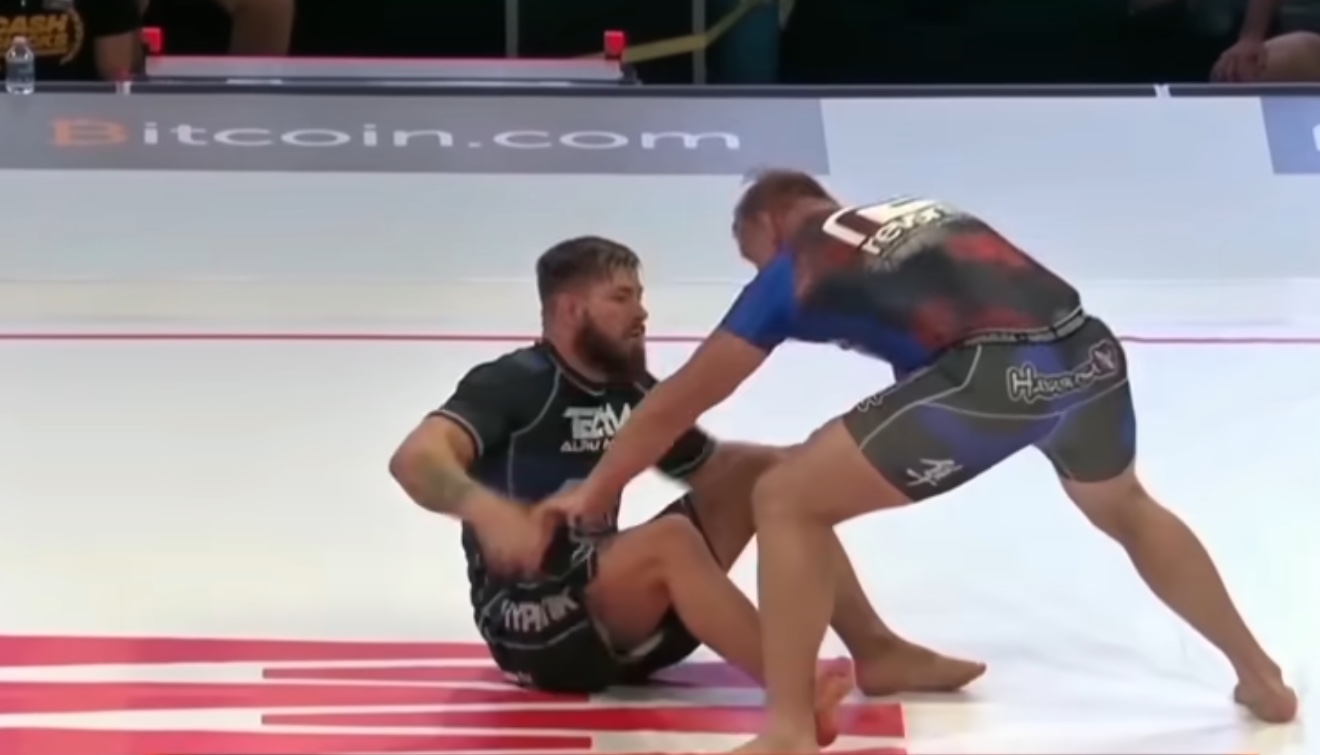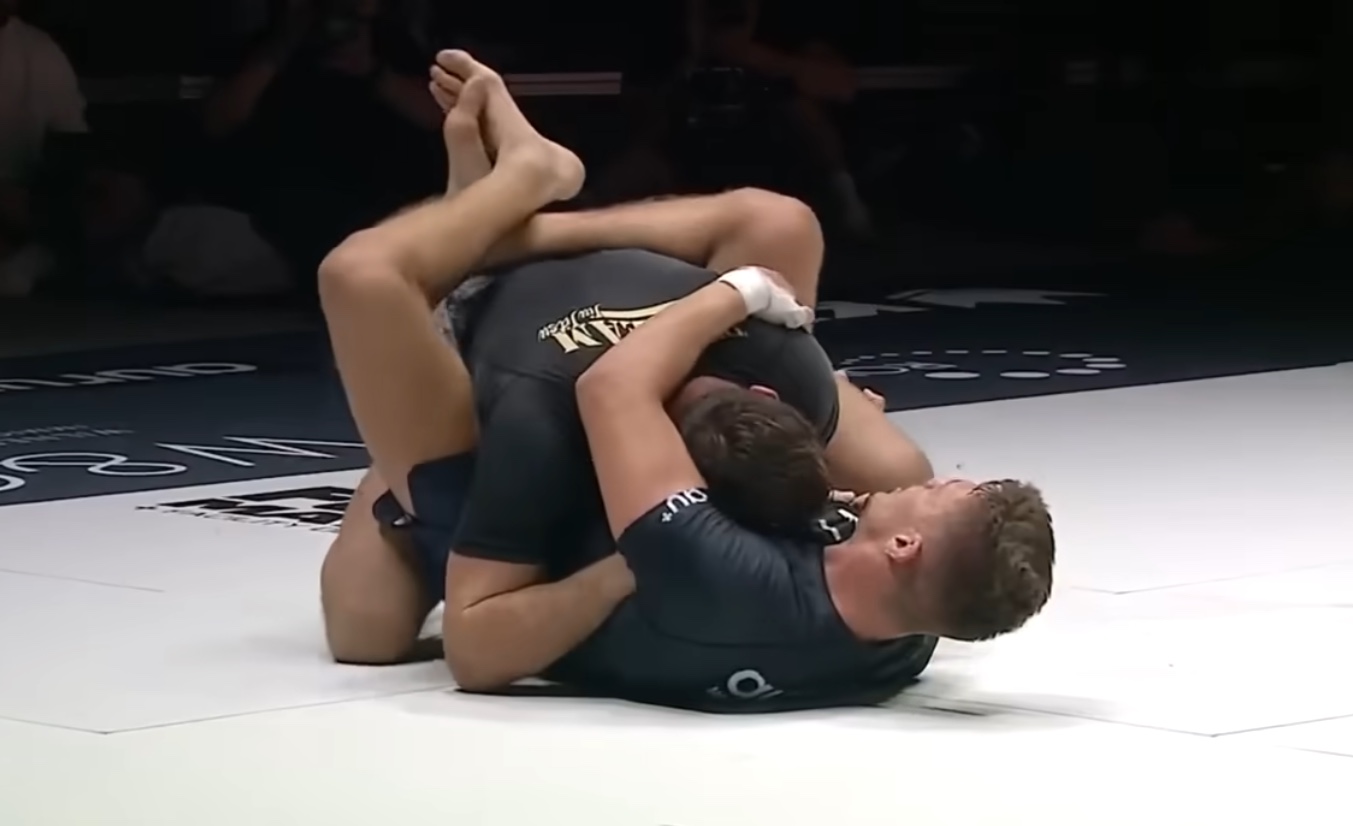
If you could only master one position in your first year of Brazilian Jiu-Jitsu, the closed guard would be a strong choice. It's safe, it's high-percentage, and it teaches the core principles (posture, grips, angle, and off-balancing) that carry into every other part of your game. This guide breaks down what the closed guard is, the details that make it work, the attacks worth learning first, and a concrete drilling plan to build it.
What is the closed guard?
The closed guard is a bottom position where you're on your back with your legs wrapped around your opponent's torso and your ankles crossed behind their back, roughly at the level of their belt or lower back. By locking your ankles you turn your legs into a belt around their middle, which lets you control the distance, glue their hips to yours, and stop them from passing. Far from being defensive, it's one of the most offensive positions in jiu-jitsu: a well-developed closed guard threatens sweeps and submissions constantly.
Where everything goes
Get the base position right before you worry about attacks. From bottom:
- Legs: Knees pinched in toward each other, ankles crossed behind your opponent. Never rest them on top of their back where they can peel them apart. Crossing low (around the belt) gives you more squeezing power than crossing high up by the shoulder blades.
- Hips: As close to your opponent as possible. Space between your hips and theirs is space they use to posture up and pass. Think "hips glued to their belt."
- Back and head: Off the mat when you're working. A flat, passive back means you're just lying there waiting to get passed. Curl up, load your shoulders, and stay connected to their upper body.
- Hands: Always doing something: gripping, fighting for grips, or pulling them down. Idle hands let your opponent establish their own grips first.
The two states: open and closed
Your ankles are either crossed (closed) or uncrossed (open). You close to rest, reset, and break posture; you open to attack, because sweeps and most submissions need your legs free to move. A common beginner trap is staying locked the whole round. You feel safe, but you can't actually do anything. Learn to open, attack, and re-close if the attack fails.
The details that make it work
Beginners often treat closed guard as just "holding on." The players who are dangerous from here obsess over a few details:
- Break their posture. A posted-up, upright opponent is safe and one knee-slide away from passing. Your first job is always to pull their head and shoulders down toward your chest, using your legs (squeeze and curl your knees toward your own face), your grips (collar and sleeve), or both. A broken-down opponent can't generate passing pressure and can't defend their own arms.
- Win the grips. The classic beginner grips are a cross-collar grip + same-side sleeve, or both sleeves, or a collar + elbow. Whoever establishes grips first dictates the exchange. Strip their grips on your collar and pants immediately. If they get a solid grip on your hips or knees, your guard is already in trouble.
- Get the angle. Square-on (belly-to-belly), you have almost no attacking power. By pinning one of their arms and walking your hips out to the opposite side, you create an angle: your chest points at their shoulder instead of their sternum. Nearly every high-percentage attack (armbar, choke, sweep) opens up from this off-center angle.
- Control one arm. Most submissions come from isolating an arm. Pin a sleeve to your hip or trap an elbow against your body and you've already started the attack before they realize it.
- Stay active. A static guard gets passed. Constant grip-fighting, posture-breaking, and hip movement keep your opponent reacting to you instead of methodically working their pass.
The first attacks to learn
Resist the urge to collect twenty techniques. Pick a small number of complementary attacks and drill them until they're automatic. A classic beginner trio (one sweep, one choke, one joint lock) covers every direction your opponent can give you.
1. The scissor sweep
The scissor sweep is the best first sweep because it teaches off-balancing and angle in one move. Where everything goes:
- Grips: Cross-collar grip (your right hand deep in their collar) and a sleeve grip (your left hand on their right sleeve). Break their posture down with the collar.
- Open and angle: Uncross your ankles and shrimp your hips out to your left, creating an angle so your chest faces their right shoulder.
- The "scissor": Bring your right knee across their stomach (shin slicing between you and them, like a knee shield) while your left leg drops low and flat against the mat near their right knee.
- The sweep: Pull them off-balance over your crossed knee with your grips, "scissor" your legs (top knee chops one way, bottom leg sweeps the other), and follow them up into mount.
The whole move fails without the off-balance: if their weight is still centered, you're trying to lift a planted opponent. Break posture first, then sweep.
If they post a leg to stop the scissor, that's your cue to switch directions, which is exactly why the next two attacks chain off the same setup.
2. The cross-collar choke
A deep two-hand collar grip forms one of the most reliable strangles in the gi. Where everything goes:
- First grip: Reach your right hand deep into their collar, thumb inside, fingers out, getting as deep behind their neck as you can. The deeper the grip, the tighter the choke.
- Break posture: Use that grip to pull their head down to your chest. You cannot finish this choke against an upright, posturing opponent. Break them down first.
- Second grip: Feed your left hand into the other collar, again deep, crossing over or under the first arm (palm-up under is the classic finish).
- The finish: Pull your elbows down and out toward the mat (not in toward yourself) and flare your wrists like you're revving a motorcycle. Your forearms (the blades, not the bones) press into both sides of their neck. Keep their posture broken the entire time.
Even when you don't finish it, a real choke threat forces them to posture up and defend with their hands, which hands you the armbar.
3. The armbar from guard
When your opponent posts an arm to defend the choke or push on your chest, the armbar is right there. Where everything goes:
- Isolate the arm: Trap their posting arm across your centerline. Grab the wrist/sleeve with both hands and pin it to your chest so it can't pull free.
- Angle off: Shrimp your hips out to the side away from the trapped arm, swinging your hips perpendicular to their body. This is the same hip movement as the scissor sweep, and that's not a coincidence.
- Climb the legs: Bring your leg on the trapped-arm side high up into their armpit/across their back, and swing your other leg over their head, clamping your knees together with their arm trapped between your thighs, thumb pointing up.
- The finish: Keep their wrist tight to your chest, pinch your knees, and slowly bridge your hips up into the elbow. Slow and controlled: this is a joint lock, not a yank.
The choke and armbar form a natural "if they defend this, I hit that" loop, the foundation of a real offensive system.
How the trio links into a system
Notice how these three chain off the same posture break and hip angle:
- The choke threat forces them to posture up and post a hand → that posted hand is the armbar.
- Defending the armbar by ripping their arm back and basing out → that base shift is the scissor sweep.
- Stopping the scissor sweep by posting a leg wide → reopens the choke as they reach to defend.
That circle (choke, armbar, sweep, repeat) is a system, not a list. Once you can flow between the three off your opponent's reactions, you're no longer "holding guard," you're hunting.
A four-week drilling plan
Here's a simple progression to turn the closed guard from theory into a reflex. Drill with a cooperative partner first, then add light resistance.
| Week | Focus | Drilling priority |
|---|---|---|
| 1 | Posture control | Breaking your partner down + recovering grips, 10 min |
| 2 | Scissor sweep | 40+ reps per side, slow to fast |
| 3 | Cross-collar choke | Grip depth and finishing mechanics |
| 4 | Choke → armbar → sweep | Chaining the three together off your partner's reactions |
The reason this works is volume. A focused drilling round gives you dozens of clean repetitions you'd never accumulate in live rolling. That's the exact argument we make in Why Drilling Beats Rolling for Beginners.
Common beginner mistakes
A few errors show up over and over in the first year. Catch these early:
- Crossing your ankles on top of their back. Cross low and behind (near their belt). Crossed high, your legs are easy to peel apart and you've also given them a chance to stack you.
- Lying flat and passive. A flat back is a passed guard waiting to happen. Stay curled up and connected to their upper body.
- Holding closed guard forever. Closed is for resetting; you have to open to attack. If you never open, you never threaten anything.
- Attacking without breaking posture. Every attack on this list assumes their head is pulled down to your chest. Posture break is step one, every time.
- Square hips. Belly-to-belly, you're weak. Almost every attack needs you to shrimp out and create an angle first.
- Letting them grip your hips and knees. If they establish strong grips on your pants or hips, strip them immediately: those grips are how the pass starts.
Don't neglect the solo work
Your closed guard depends on hip mobility and the ability to create angles. You can sharpen both at home with shrimping, hip switches, and bridging. See 12 BJJ Solo Drills You Can Do at Home. Better hips mean better angles, and better angles mean a more dangerous guard.
Track your reps
The closed guard rewards repetition more than almost any position. Logging your drilling in DrillBuddy, and tagging each move by position, lets you see at a glance how many reps you've banked on the scissor sweep versus the armbar, so you can shore up the weak links. You can also browse curated drills to add structure to each session.
Pick the scissor sweep, drill it forty times tomorrow, and start building a guard people don't want to be inside.